
.tf→
origindelivery
Infrastructure as Code
Give the environment a blueprint.
Explore the example
This website’s infrastructure is defined in code: its origin, delivery layer and access controls.Open the blueprint ↗
Open source. Open possibilities.
Explore the app. Understand the platform.
Help build the shared banking core.
Public sandbox · Reference implementation

A shared banking foundation for an AI future. Explicit rules, reviewable changes and traceable evidence, with people in control.
A banking decision travels through products, systems and teams. Bank as Code makes those connections part of the design.
A product rule becomes explicit.
Scenarios reveal consequences.
People examine the change.
Decisions stay with their context.
Explore the project through working examples and the experiences we’re building next.
Give the environment a blueprint.
Keep the explanation with the software.
Connect a requirement to its evidence.
Make the terms executable.
Keep decisions in context.
Give every rule change a history.
Give AI a role and clear boundaries.
Make the connections visible.
Three stories. Three ways to explore what Bank as Code can make possible.
From a product definition to a customer outcome.
Explore the product story ↗Make a control understandable and its review traceable.
Explore the control story ↗See how a tool request meets a policy boundary.
Explore the AI story ↗Choose your way in
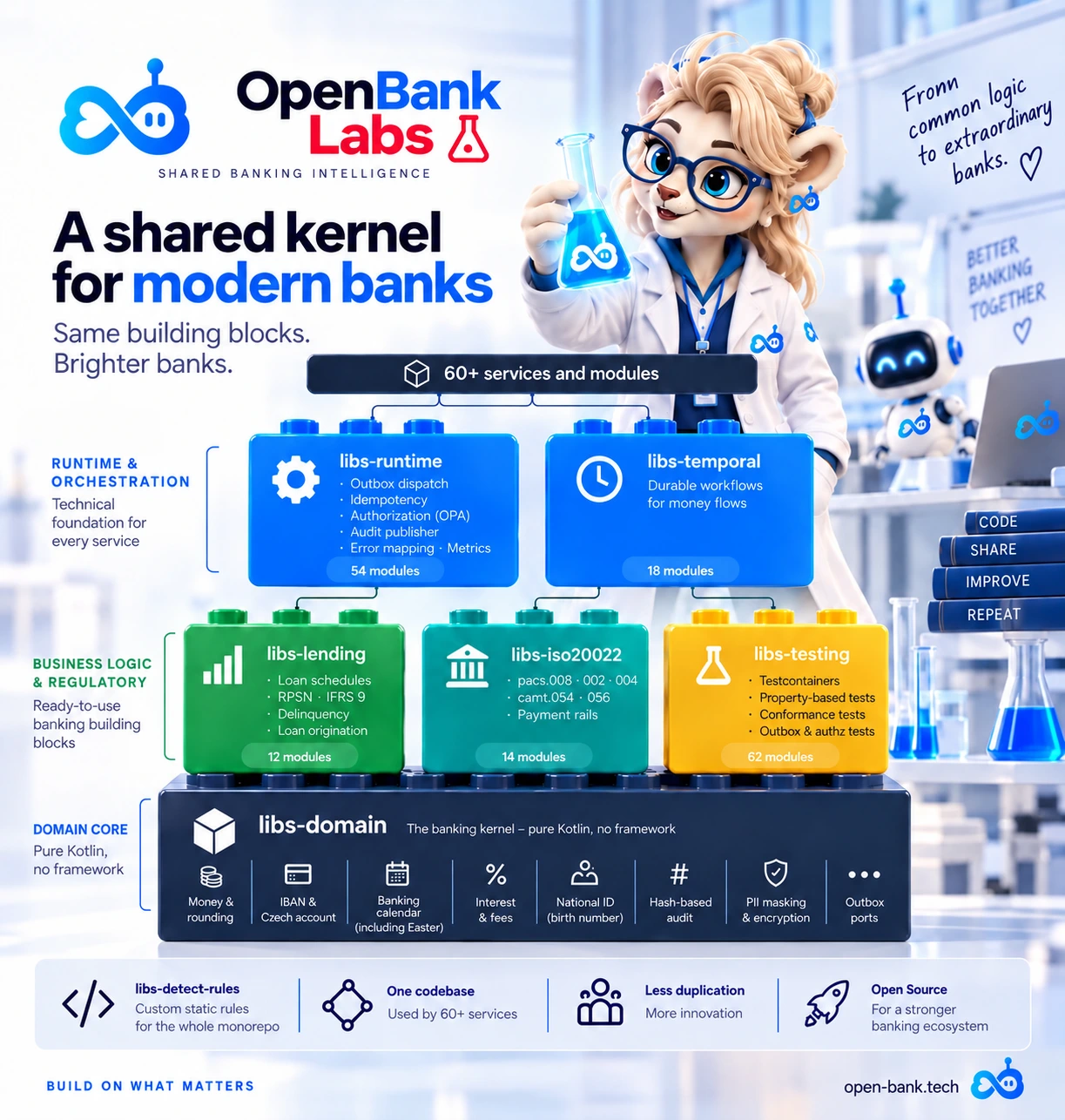
OpenBank is an open-source banking reference implementation: connected domains, a customer app, shared banking libraries, Product Studio and governed AI tools. Follow the architecture, the evidence and the experience from one place.
See the real customer experience, then join the iPhone beta.
02 / THE PLATFORMExplore the domains, services and contracts that make it work.
03 / THE AGENTSClear roles, bounded tools and a human responsible for impact.
The bank as one system
OpenBank is an open-source banking ecosystem for the work inside a bank and the relationships it serves outside. Explore the domains together, follow the evidence behind them and see how a shared core keeps the experience coherent.
Identity, products, accounts, payments, risk and operations are separate domains with visible contracts. Follow how they work together instead of treating each service as an island.
Explore every banking domain →The loop: shared rules → tests that exercise them → operational signals that show what actually happened.
A holistic bank view starts with identity: one person may act for companies, hold different products and eventually bring a wider wealth picture into view. Each connection needs a source, permission and purpose.
Explore the context-graph design →Customer 360 is shipped; person–company links are partial and the broader wealth view is planned.
Design specifications and contextual offers, review a versioned draft, then publish through maker-checker controls. The catalog keeps the approved terms clear and reproducible.
Operator sign-in required · explore the source
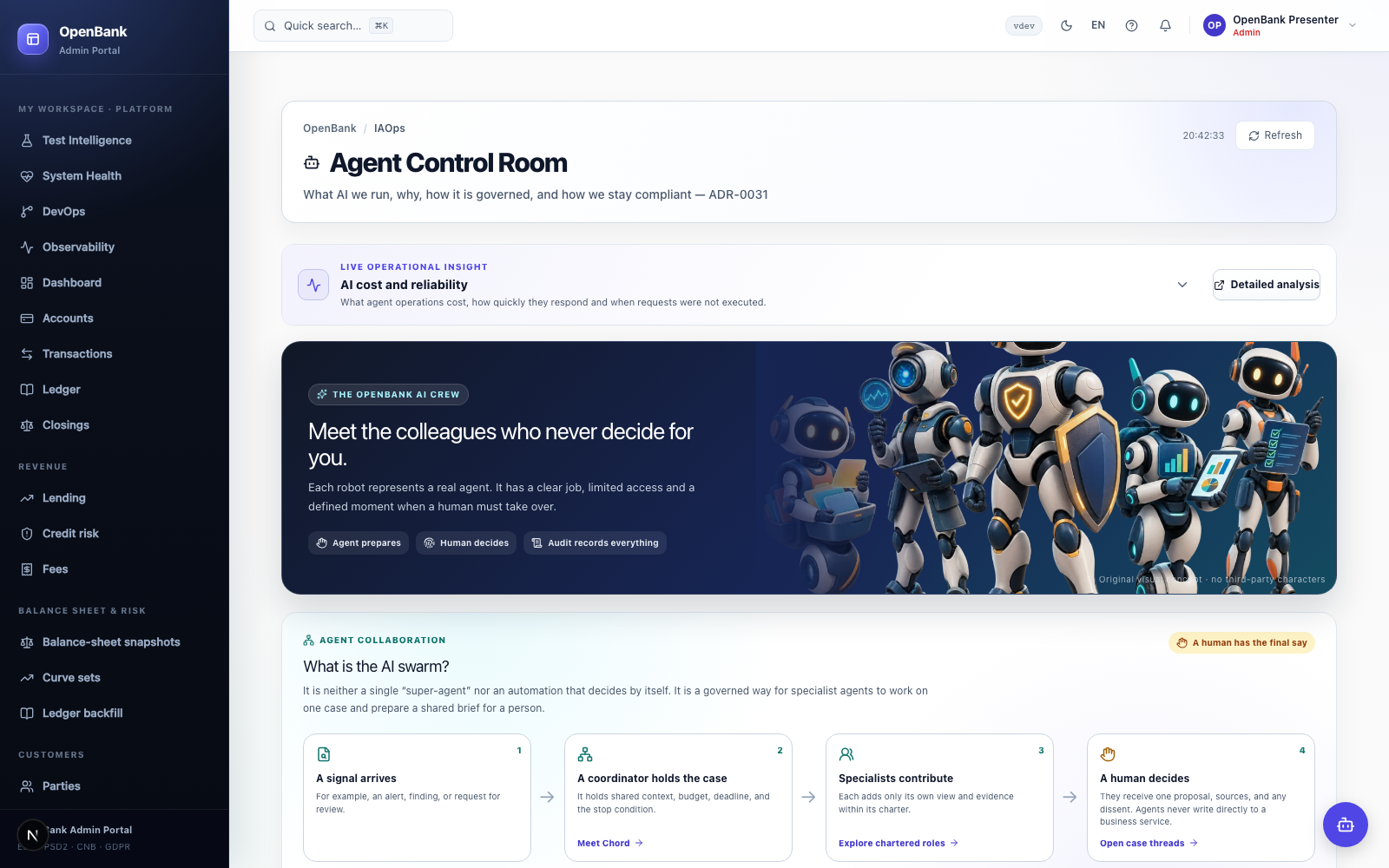
A customer-facing copilot and governed MCP tools let AI work with banking context in the public sandbox. Access follows consent, policy and audit; payment actions remain proposals for human review.
External MCP access beyond the sandbox is not yet enabled.
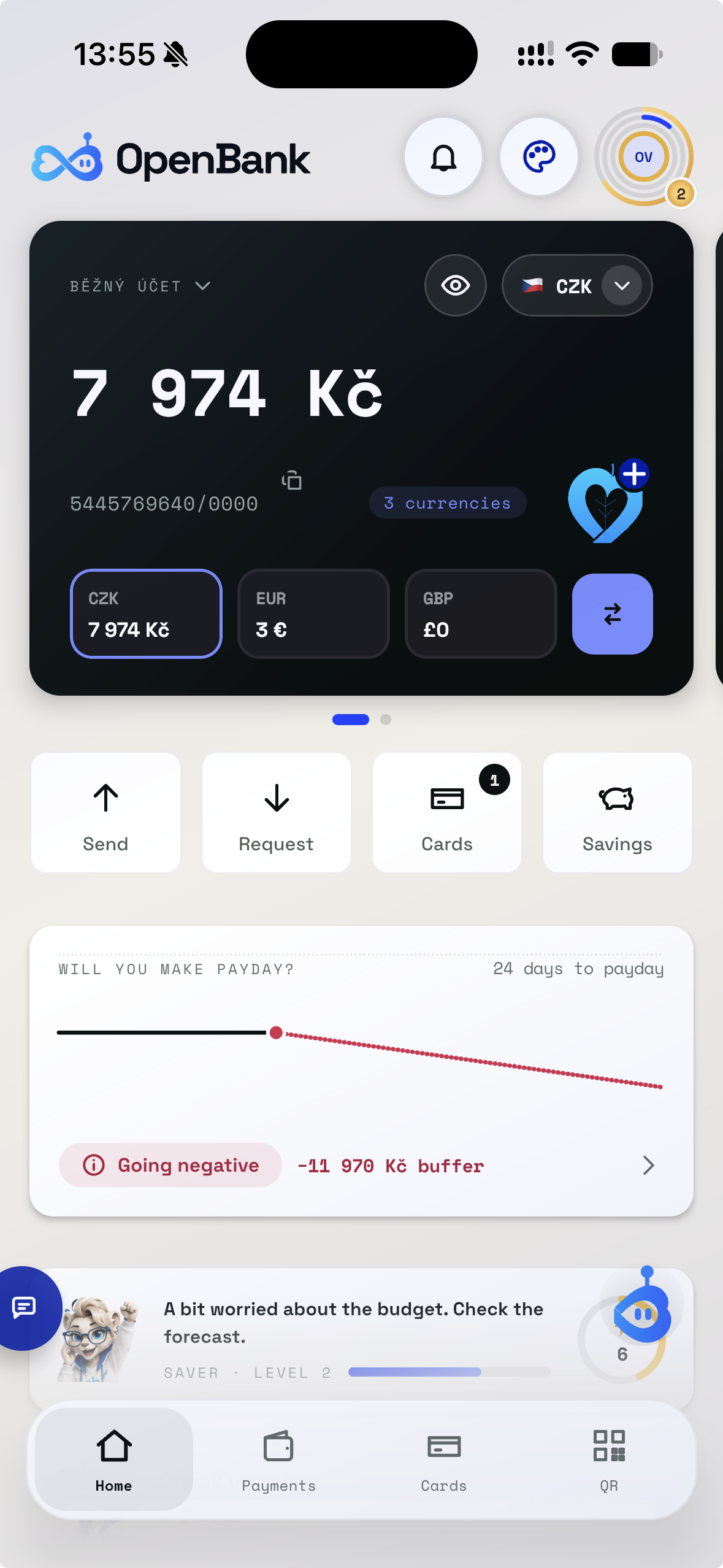
The customer app
A familiar app with a curious little bot. Explore balances, currency pockets and everyday banking on the same open core.
Kotlin Multiplatform and Compose connect the iOS and Android experience. The screenshot shows the app running on an iPhone, with its real home screen and the Lípa identity.
Drop the Apple ID email your TestFlight uses and we'll send an invite. That's the only thing we ask for.
No account, no card, no tracking. Your email is used only to send the TestFlight invite, with your explicit consent, and deleted when the beta ends. What exactly we collect ↓
Inside the platform
Accounts are just the beginning. Follow payments, identity, credit, treasury, risk, customer relationships and the platform that connects them.
A repository inventory shows what is implemented in code, not what is running right now.
Meet the crew
Our lions help you explore. Our bot helps you understand. Agent roles have their own tools, permissions and limits.
Inspect the charters, follow a proposal and see where a human takes over. A friendly face never stands in for approval authority.

Open the actual product
Open mind. Open source. Open bank.
Build, test, challenge or contribute. Help turn a reference implementation into a shared foundation for better banking software.
The Open Bank Foundation remains a proposal, not an incorporated organization.
Share the common core. Keep your customer experience your own.